

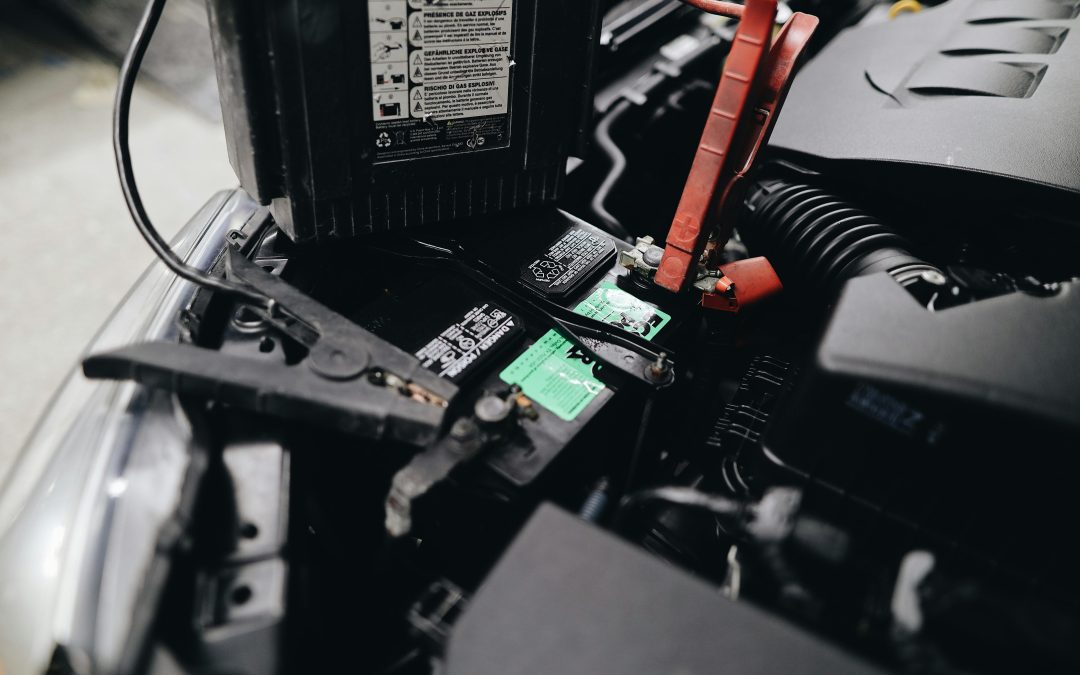
Did you know that a car battery’s self-discharge rate can greatly increase if stored directly on concrete?
It’s vital to find the right spot, like a wooden shelf in a moderate environment, to keep your battery in top condition when you’re not using your vehicle.
You’ll also want to make sure it’s fully charged before putting it away, as this prevents the dreaded sulfation that can shorten its lifespan.
Now, let’s explore some often overlooked, yet simple steps you can take to maintain the health of your battery over periods of inactivity; ensuring it’s ready when you are.
Selecting the Right Storage Location
To guarantee your car battery remains in prime condition, select a cool, dry, and well-ventilated area for storage, ideally where temperatures range between 10 to 15 degrees Celsius. This important temperature helps preserve the battery’s capacity and prevents the accelerated discharge rates often caused by extreme temperatures.
Choosing the right storage location is pivotal for maintaining your car’s battery. Steer clear of places with high moisture or humidity exposure which can lead to corrosion of battery terminals.
Corrosion not only shortens the battery life but can also compromise your vehicle’s reliability. You’re part of a community that values long-term efficiency and cost-effectiveness, so it’s essential to keep these factors in check.
Make it a routine to check the battery regularly once it’s in storage. This isn’t just about a quick glance; you need to inspect for any signs of damage or corrosion and ensure the storage conditions remain stable. Maintaining your battery in this way ensures you’re never caught off guard by a preventable issue.
Initial Charging and Maintenance
Charge your car battery to 12.7 to 12.8 volts before storage, as maintaining this specific voltage is essential to prevent sulfation and promote long-term battery health.
Achieving this precise charge level entails using a reliable charger and monitoring the voltage closely to avoid overcharging, which can lead to electrolyte loss and damage.
Once your vehicle’s battery is fully charged, it’s important to disconnect the battery terminals. This step helps prevent parasitic drains that can deplete the battery over time. You’re not just safeguarding your battery; you’re making sure that your vehicle is ready when you need it.
For ongoing maintenance, consider the use of a battery maintainer or a trickle charger. These devices are designed to keep your battery optimally charged without the risks of overcharging. They automatically adjust the charge rate and maintain the ideal voltage levels, which is essential for the longevity of your battery.
Regularly monitor the charging status to ensure everything is functioning as expected. This proactive approach isn’t just about maintaining a piece of equipment; it’s about being ready for the next journey, knowing your vehicle is as prepared as you are.
Monitoring Battery Health
Regularly checking your battery’s charge levels with a multi-meter is essential for monitoring its health. This tool gauges both the voltage and the internal resistance, clues that indicate whether your battery is functioning at its best or if it’s succumbing to the inevitable self-discharge that occurs during periods of inactivity.
Understanding these readings is key to maintaining a healthy battery. For instance, a high internal resistance can suggest aging or damage, which mightn’t be evident just from a visual inspection.
To combat the effects of self-discharge, consider using a battery maintainer or a trickle charger. These devices are designed to maintain your battery at its peak charge level, preventing the charge from dropping too low during storage.
They’re especially handy as they adjust the charge rate based on your battery’s needs without overcharging, hence ensuring your battery remains in a healthy state.
Make it a routine to check your battery’s charging status periodically. This isn’t just about keeping the battery alive; it’s about keeping it in top condition, ready to serve when called upon.
Cleaning and Terminal Care
Ensuring clean battery terminals is essential for preventing corrosion and enhancing overall battery performance. When your car battery sits unused for long periods, it’s important to keep the terminals spotless to maintain a fully charged and functional battery. Let’s explore how you can achieve this.
Start by visually inspecting the terminals for any signs of corrosion. White or greenish powdery deposits can indicate corrosion, which often leads to transient power loss and compromises your battery’s performance.
You’ll need a neutralizing solution; commonly a mixture of baking soda and water; to clean these deposits effectively. Apply the solution with a brush specifically designed for battery care, making sure you cover all affected areas.
Once the terminals are clean, rinsing them with clean water is essential to remove any residual cleaning solution, which could further attract corrosion if left to dry. After drying the terminals, apply a corrosion-resistant spray. These sprays form a protective barrier that helps keep your car battery’s terminals free from future corrosion.
Addressing Long-Term Storage Issues
When storing your car battery for extended periods, it’s important to address issues like self-discharge and sulfation to maintain its performance.
Here’s how you can make sure your battery stays in top condition during long-term storage:
- Use a Battery Maintainer or Trickle Charger
A battery maintainer or trickle charger is essential for preserving car battery health. These devices maintain ideal charge levels, preventing the natural tendency of a battery to lose charge over time. Connect the device to your battery, and it’ll manage the charge level without overcharging, ensuring readiness and extended battery life.
- Disconnect to Prevent Parasitic Drain
To avoid unnecessary battery drain, either disconnect the negative battery cable or remove the battery entirely if storage durations are significantly long. This step is important as even when off, your car can have parasitic drains through systems like clocks or passive alarms, which slowly deplete battery charge.
- Maintain Proper Storage Conditions
Store your battery in a cool, dry, and well-ventilated area. Extreme temperatures and moisture are detrimental and can accelerate the self-discharge process and contribute to sulfation. Proper storage conditions are key to extending the lifespan and effectiveness of your car battery during periods of non-use.
Conclusion
Imagine slipping into a cozy, dimly lit garage, where your car battery nestles safely, snug at an ideal chill of 12 degrees Celsius. You’ve done well: it’s charged, terminals gleam free of corrosion, and a trickle charger hums softly, keeping the charge just right.
Regular checks with your trusty multi-meter keep surprises at bay. This vigilance guarantees that when the time comes, your car roars to life, ready for the road, thanks to your meticulous care.
Recent Comments